Standardize the execution layer
Biological research can help address challenges far beyond the laboratory, from human health and food security to sustainable production. Yet progress is often limited by experimental workflows that remain largely artisanal and difficult to parallelize, restricting how many hypotheses, variants, or conditions researchers can test in each cycle.
Where the unit operations of engineering biology are mature, repetitive, and procedural, biofoundry infrastructure standardizes that essential execution layer, automates it, and makes it scalable. That scalability shifts the boundaries of exploration, making it possible to build, test, and learn at an unprecedented depth and pace.
That shift also frees researchers to focus on the work that matters most: generating scientific insight from results, making smarter design choices, asking better questions, and solving the next problem.
Founding the foundry
Since its establishment, the Foundry has expanded alongside Concordia's bioprocessing infrastructure. In 2019, it became a founding member of the Global Biofoundries Alliance (GBA), an international network of biofoundries.
The facility was created to bring automation, standardization, and high-throughput experimentation to biological engineering research, enabling researchers to design, build, and test biological systems at a scale that would otherwise be difficult to achieve.
Initially built around strain engineering and synthetic biology, the platform's capabilities now span automated mammalian cell engineering, microbial bioprocess development, and sustainable biomanufacturing infrastructure.
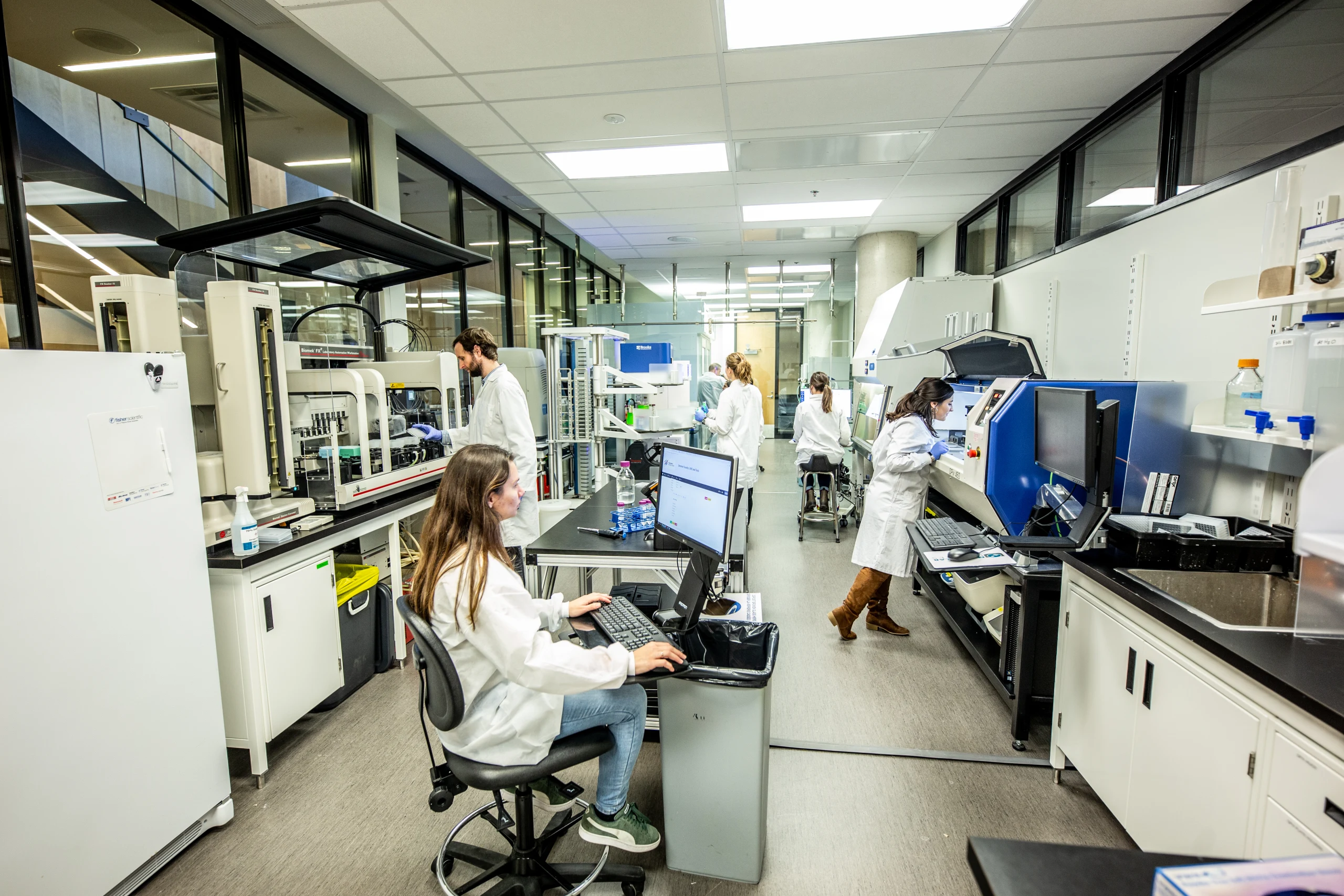

Professor Emeritus, Biology, Concordia University
“Now researchers can come to the Genome Foundry and work on thousands of genes at a time.”
On the power of automation to unlock natural and synthetic biological diversity.
From proof of concept toward translation
We support researchers, startups, companies, and collaborators at many points in the development of biological systems and applications.
Projects enter the platform at different points. Some involve designing and testing biological systems, developing assays, screening candidates, or identifying promising leads. Others focus on improving reproducibility, performance, manufacturability, process robustness, or readiness for larger-scale development.
Our role is to provide the infrastructure, automation, workflows, and expertise needed to generate reliable evidence, resolve technical questions, and help promising biological systems move toward useful applications.
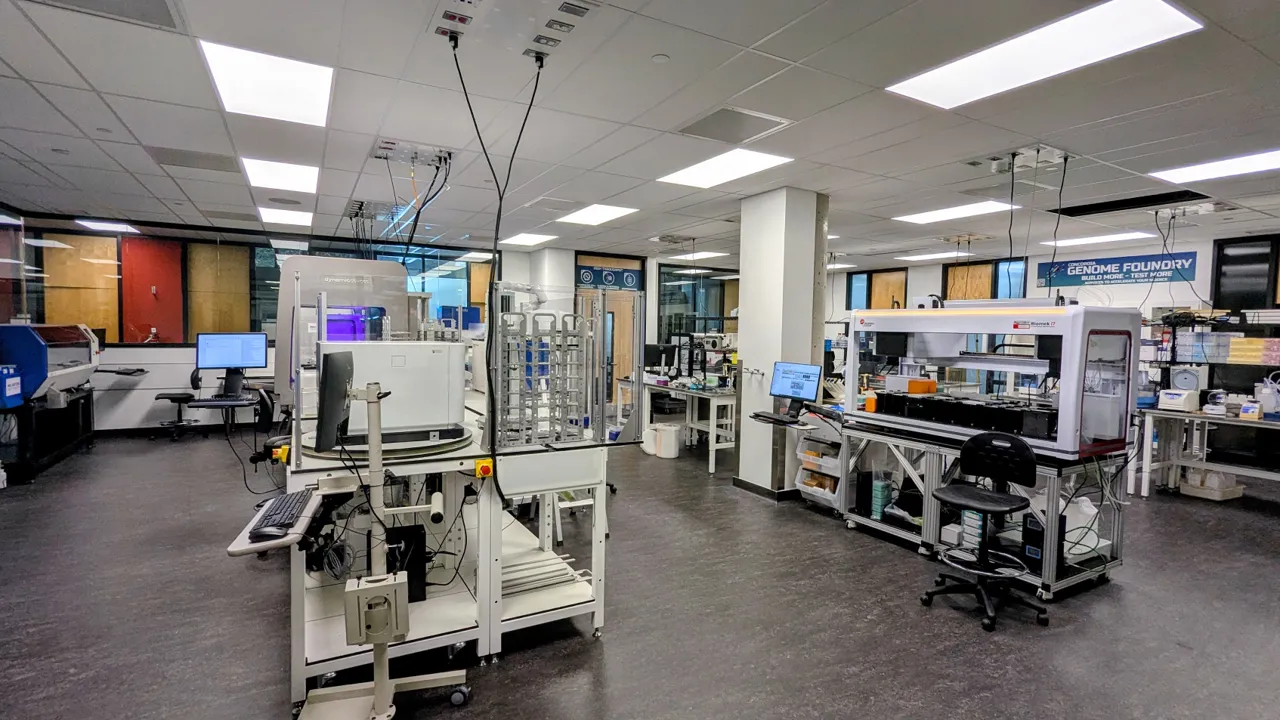
Supported by a Public Research Ecosystem
Supported by Concordia University, the Canada Foundation for Innovation, the Government of Québec, and a growing ecosystem of partners.